

Periodontology – Health of Gums and Tooth-Supporting Tissues
Periodontology is the branch of dentistry that deals with the prevention, diagnosis, and treatment of diseases of the gums and the bone that supports the teeth. Healthy teeth cannot exist without healthy supporting tissue – therefore, care for the periodontium is the foundation of long-term oral health.
In our practice, we provide expert therapy for periodontal diseases with an individual approach to each patient.
Regular Check-ups
Regular check-ups are key to the early detection of periodontal problems – such as bleeding gums, gum recession, or tooth mobility. We recommend a check-up every 6 months, even when there are no symptoms.
During the check-up, we perform:
- A detailed examination of the gums and supporting tissue
- Measurement of pocket depth around the teeth
- Assessment of tooth mobility
- Advice on care and possible therapy
Early detection of periodontal disease can prevent tooth loss and the progression of inflammation.
Professional Teeth Cleaning (Calculus Removal)
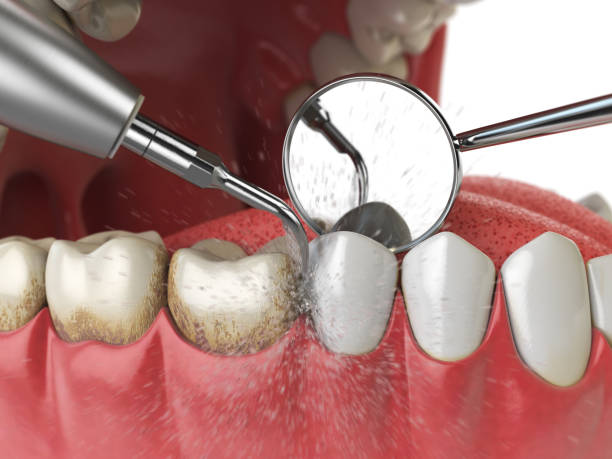
Accumulated dental calculus and soft deposits are the main causes of gum inflammation (gingivitis) and periodontitis. Professional cleaning removes calculus and deposits from above and below the gumline.
It includes:
- Ultrasonic calculus removal
- Mechanical cleaning of hard-to-reach areas
- Polishing of the tooth surfaces
The procedure is painless, lasts 30–45 minutes, and is recommended at least twice a year.
Teeth Sandblasting (Air-Flow)
Sandblasting is a procedure that uses a fine powder and a pressurized water jet to remove stains (from coffee, tea, tobacco, wine) and soft deposits from the tooth surface.
Advantages of sandblasting:
- Non-invasive and completely painless
- Refreshes the smile and restores the natural color of the teeth
- An ideal complement to professional cleaning
Sandblasting can be done on its own or as a final step after calculus removal.
Curettage (Deep Cleaning of Periodontal Pockets)
Curettage is a specialized periodontal procedure to remove inflammatory tissue and deposits from deep periodontal pockets, below the gumline.
Types of curettage:
- Open curettage – with a surgical approach
- Closed curettage – without a surgical incision
The procedure is performed under local anesthesia and often in multiple visits, depending on the condition. Curettage is the fundamental therapy in the treatment of chronic periodontitis.
Oral Hygiene Instructions
Without proper daily oral hygiene, no periodontal procedure can yield lasting results. During therapy, each patient receives detailed instructions on how to care for their teeth and gums at home.
This includes:
- Advice on the proper brushing technique
- Recommendations for toothbrushes, toothpaste, and dental floss
- Learning how to use interdental brushes and water flossers
- Monitoring motivation and progress through follow-up appointments
The goal is to ensure that the patient can independently maintain periodontal health, with the support of a professional team.
The Most Common Signs of Periodontal Disease
Contact us if you notice:
- Bleeding when brushing
- Bad breath
- Receding gums
- Sensitivity to touch or cold
- Loose teeth
Early treatment can prevent permanent damage and tooth loss.
Why choose us for periodontal therapy?
- An experienced team and individualized treatment plans
- Digital diagnostics and modern treatment methods
- Patient education and monitoring of long-term success
- Prevention as the foundation of health for the entire oral cavity