

Oral Surgery
Oral surgery encompasses a series of surgical procedures within the oral cavity performed to preserve the health of teeth, jaws, and soft tissues. In our practice, we use modern diagnostic methods and minimally invasive techniques to make every procedure as safe and comfortable as possible for the patient.
Below are the most common oral surgery procedures we perform:
Tooth Extraction
Tooth extraction is a surgical procedure to remove a tooth that cannot be saved by conservative treatment (filling, root canal treatment, prosthetics). The most common reasons for extraction include:
- Severely damaged teeth due to decay or trauma
- Teeth with advanced root inflammation
- Periodontally compromised teeth
The procedure is performed under local anesthesia, without pain, and recovery is usually fast and without complications.
Wisdom Tooth Extraction – Alveotomy
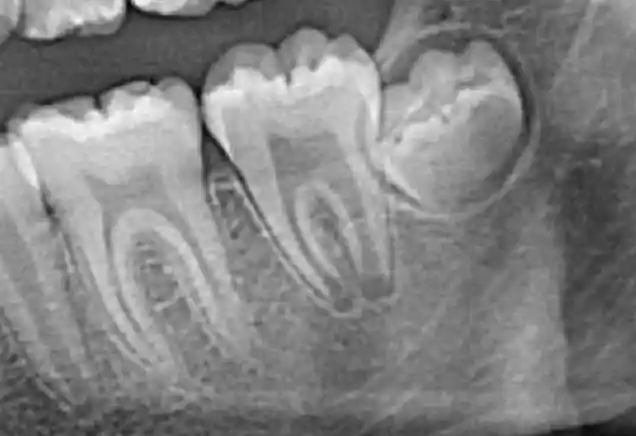
If wisdom teeth have not fully erupted or are improperly positioned, they often cause pain, swelling, or pressure on adjacent teeth. In such cases, surgical removal of the wisdom tooth, known as an alveotomy, is necessary.
An alveotomy includes:
- Incising the mucosa and exposing the bone
- Extracting the impacted (unerupted) wisdom tooth
- Suturing and post-operative care
The procedure is performed under local anesthesia, and if necessary, with additional sedation. Recovery takes a few days, with recommended measures such as cold compresses, a soft diet, and analgesics.
Watch the alveotomy (wisdom tooth extraction) animation
Apicoectomy
An apicoectomy is a surgical procedure to remove the tip of a tooth's root along with inflamed tissue that cannot be removed by conventional root canal treatment.
It is most often performed when:
- Inflammation persists even after endodontic treatment
- There is a cyst or granuloma at the root tip
- It is not possible to access the canal through standard means
The procedure is performed with precision and under control, often using magnification (loupes or a microscope), to preserve the surrounding structure and the tooth.
Cystectomy
A cystectomy is the surgical removal of a cyst – a pathological cavity filled with fluid that most often forms around the tip of a tooth's root or in the jaw.
Cysts can cause:
- Swelling of the bone and face
- Pain and pressure
- Shifting of teeth
- Deterioration of the surrounding bone
Cyst removal involves:
- Incising and opening the mucosa
- Removing the cyst and diseased tissue
- If necessary – tooth extraction or apicoectomy
After the procedure, the tissue is closed with sutures, and the patient receives detailed instructions for post-operative care.
Corticotomy
A corticotomy is a surgical procedure used in orthodontic therapy to accelerate tooth movement. It consists of carefully cutting a thin layer of bone between the roots of the teeth, which reduces resistance to movement and allows for faster achievement of the desired orthodontic results.
Advantages of corticotomy:
- Shortened duration of orthodontic therapy
- Better control of tooth movement
- Increased stability after therapy
The procedure is performed in collaboration with an orthodontist, under local anesthesia, and is most often combined with wearing braces.
Why choose us for oral surgery procedures?
- Years of experience and specialization in oral surgery
- Use of digital diagnostics and minimally invasive techniques
- Individual approach to each patient
- Fast and safe recovery with constant support from our team